 Ramrajeshbee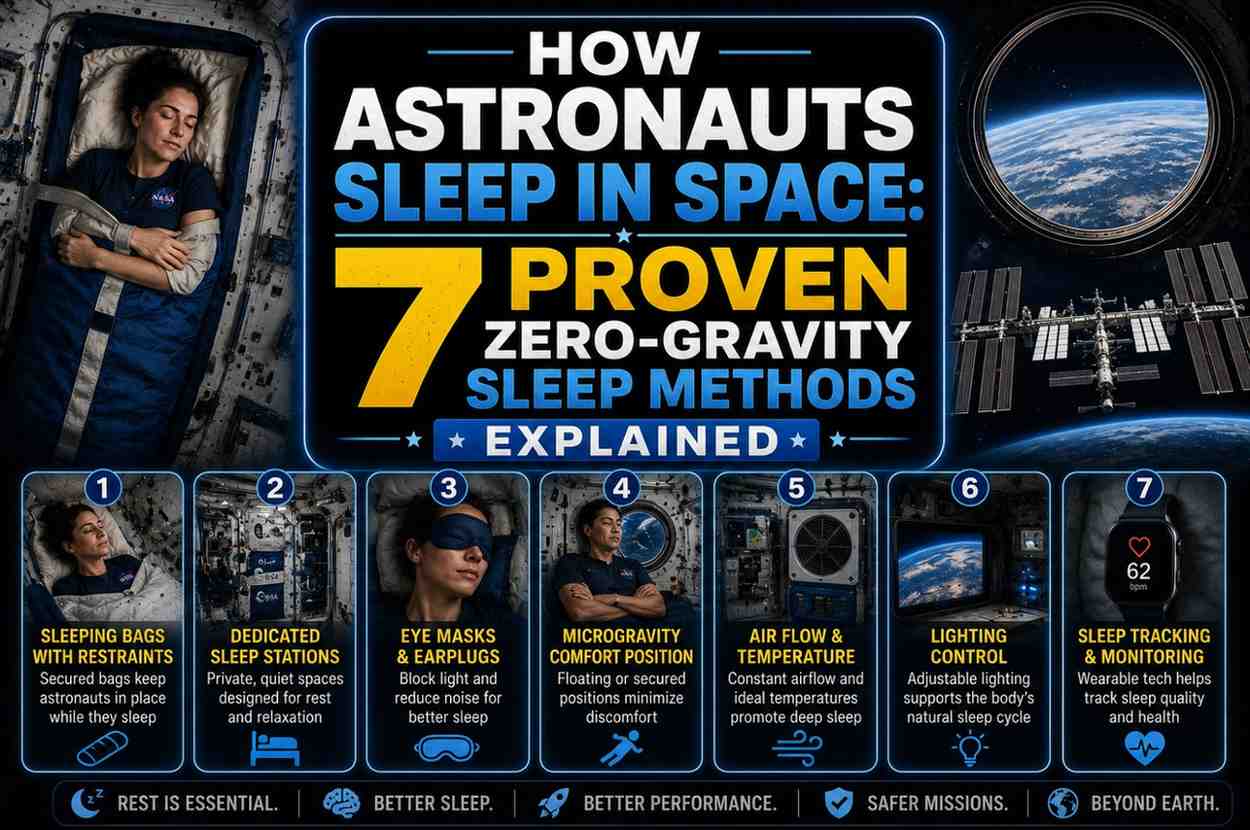
Introduction
How astronauts sleep in space is one of the most fascinating — and genuinely surprising — aspects of life beyond Earth. Without gravity pulling you down, there’s no “lying down.” There are no pillows, no mattresses, and no natural day-night cycle.
And yet, rest is absolutely critical to mission safety and crew health.
Here’s everything you need to know about how astronauts sleep in space — and why getting it right is harder than it sounds.
Why Sleep in Space Is Uniquely Challenging
Before we explore how astronauts sleep in space, it helps to understand why it’s difficult in the first place.
On Earth, your brain uses several cues to regulate sleep:
- Light and dark cycles — the Sun rising and setting
- Gravity — the feeling of lying down signals rest
- Temperature drops — your body cools naturally at night
- Routine — consistent mealtimes, activity, and rest
In space, all of these are disrupted. The ISS experiences 16 sunrises and sunsets every 24 hours as it orbits Earth at 17,500 mph. Gravity is effectively absent. And the station’s temperature is controlled artificially.
This creates significant challenges for the sleep cycles of crew members.
7 Proven Methods: How Astronauts Sleep in Space
1. Sleeping Bags Attached to Walls
On the ISS, each crew member has their own small sleeping compartment — roughly the size of a phone booth. Inside, they zip into a sleeping bag that is anchored to the wall.
This is one of the primary answers to how astronauts sleep in space — you’re not lying in bed, you’re floating in a bag, tethered so you don’t drift into equipment.
2. Arm Restraints to Prevent Floating
Without restraints, a sleeping astronaut’s arms float outward in front of them — a naturally eerie position in zero gravity. Some astronauts use loose straps or tuck their arms into the bag to keep them close.
3. Light-Blocking Masks and Shades
Because the ISS experiences 16 sunrises per day, blackout shades are essential to how astronauts sleep in space. Crew members also use sleep masks to block out any remaining artificial light in the cabin.
4. White Noise and Earplugs
The ISS is surprisingly loud. Fans, pumps, and life support equipment run continuously — generating a constant 70-decibel hum. That’s roughly equivalent to a vacuum cleaner running in the next room.
Astronauts use earplugs or headphones playing white noise or music to fall and stay asleep.
5. Melatonin and Sleep Medication
NASA medical staff closely monitor sleep quality for all crew members. When needed, melatonin supplements or prescription sleep aids are available.
Sleep deprivation is a serious safety risk in space — it impairs judgment, reaction time, and emotional regulation, all of which are critical to crew survival.
6. Strict Light Schedules
To combat the 16-sunrise problem, the ISS uses programmable LED lighting that mimics natural Earth day-night cycles. Blue-spectrum light is dimmed in the evening to signal bedtime to crew members’ circadian systems.
This carefully managed light schedule is a cornerstone of how astronauts sleep in space today.
7. Exercise-Induced Fatigue
NASA schedules two hours of mandatory exercise daily. This isn’t just for physical health — it also ensures astronauts are genuinely physically tired by the end of their workday.
Exercise-induced fatigue is one of the most natural and effective sleep aids available aboard the ISS.
How Long Do Astronauts Sleep in Space?
NASA guidelines recommend 8.5 hours of sleep per night for ISS crew members. In practice, surveys show most astronauts sleep only 6 to 6.5 hours per night.
This chronic mild sleep deprivation accumulates over long missions and contributes to performance decline, mood disturbances, and health complications. It’s one of the most persistent challenges in understanding how astronauts sleep in space.
Studies from long-duration ISS missions show that sleep quality generally worsens the longer an astronaut stays aboard — even with all the mitigation strategies in place.
The Private Sleep Quarters on the ISS
Modern ISS crew quarters were designed to give astronauts privacy — a major upgrade from early space travel when crews slept in open areas.
Each sleeping unit includes:
- A sleeping bag mount on the wall
- Laptop mount for personal use or entertainment
- Storage for personal items
- Ventilation to prevent CO2 buildup around the face
- Lighting controls
Preventing CO2 buildup near the sleeper’s face is critical — in microgravity, exhaled CO2 doesn’t rise away from you. Without ventilation, you could rebreathe it, leading to headaches and in extreme cases, loss of consciousness.
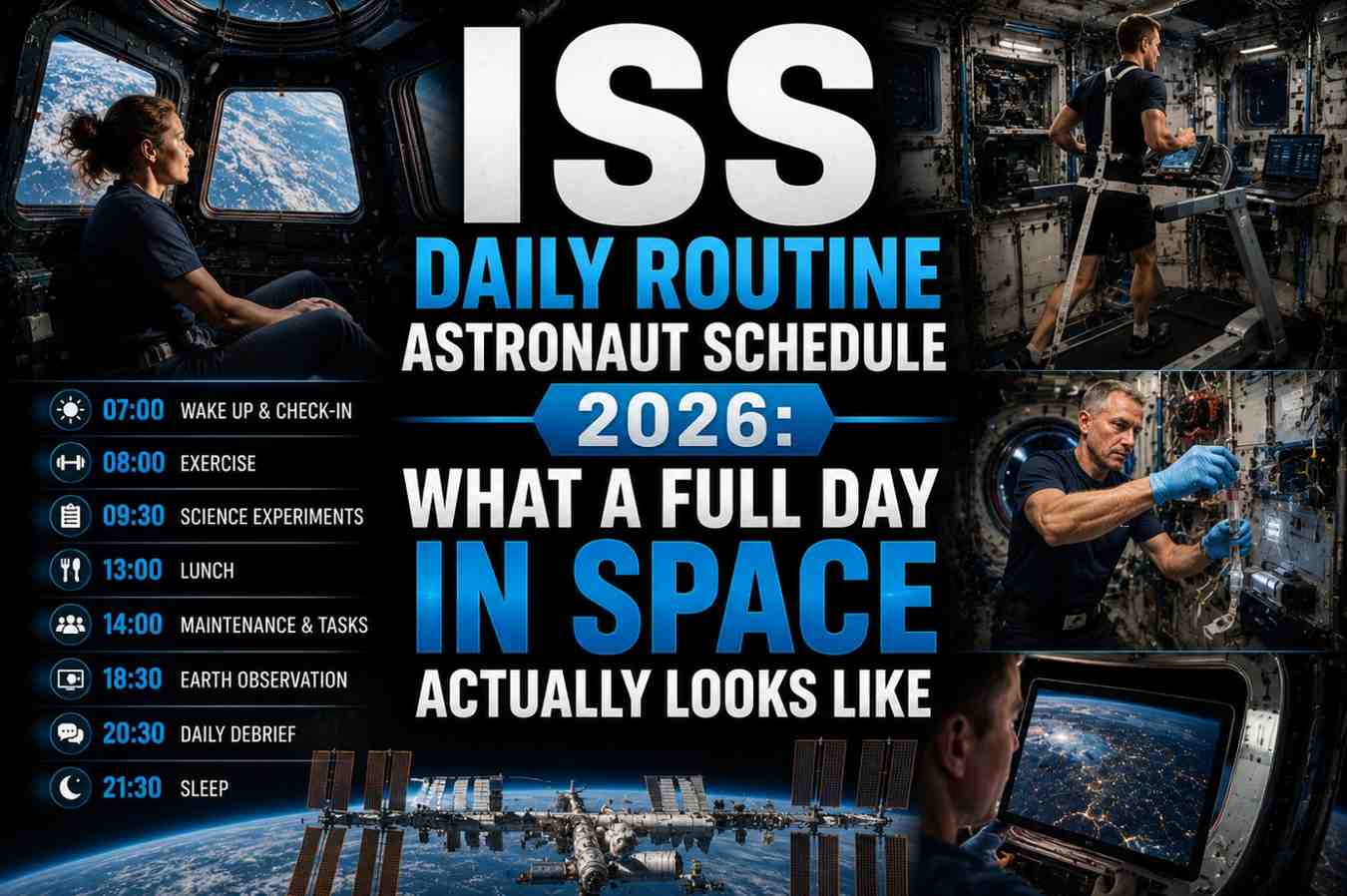
Related Article: ISS Daily Routine Astronaut Schedule 2026
How Astronauts Sleep in Space vs. How You Sleep on Earth
| Feature | Earth Sleep | Space Sleep |
|---|---|---|
| Position | Horizontal | Any orientation |
| Surface | Mattress | Sleeping bag on wall |
| Light cycle | Natural 24-hr | 16 sunrises/day |
| Noise level | Variable | ~70 decibels constant |
| CO2 management | Natural airflow | Forced ventilation required |
| Duration target | 7–9 hours | 8.5 hours (often 6) |
The Psychological Side of Sleeping in Space
Sleep in space isn’t just a physical challenge — it’s psychological too. Being far from Earth, under constant stress, and in an unfamiliar environment affects the mind in ways that make deep sleep harder to achieve.
NASA’s astronaut mental health support teams work closely with crew members to address anxiety, isolation, and the mental weight of knowing that a malfunction during sleep could be life-threatening.
Related Article: Astronaut Mental Health in Space
External Resources
FAQ: How Astronauts Sleep in Space
Q1: How do astronauts sleep in space without floating away? They use sleeping bags tethered to the walls of their personal sleep compartments aboard the ISS.
Q2: How many hours do astronauts sleep in space? NASA recommends 8.5 hours, but most astronauts report sleeping only 6–6.5 hours per night.
Q3: Do astronauts dream in space? Yes — REM sleep and dreaming still occur in space, though sleep quality is often reduced compared to Earth.
Q4: Is it dark when astronauts sleep in space? Not naturally — the ISS experiences 16 sunrises per day, so crew members use blackout shades and sleep masks.
Q5: Do astronauts have their own rooms on the ISS? Yes — modern ISS crew quarters are individual, phone booth-sized compartments with privacy and lighting controls.
Conclusion
How astronauts sleep in space is a triumph of human ingenuity and physiological adaptation. From sleeping bags anchored to walls to blue-light therapies and strict exercise schedules, NASA leaves nothing to chance when it comes to crew rest.
Understanding how astronauts sleep in space gives us a profound appreciation for just how alien the ISS environment truly is — and how much preparation it takes to keep human beings healthy and functional far from home.
Want to learn more about daily life on the ISS? Explore our full guide to the astronaut daily schedule — from wakeup to lights out.