 Ramrajeshbee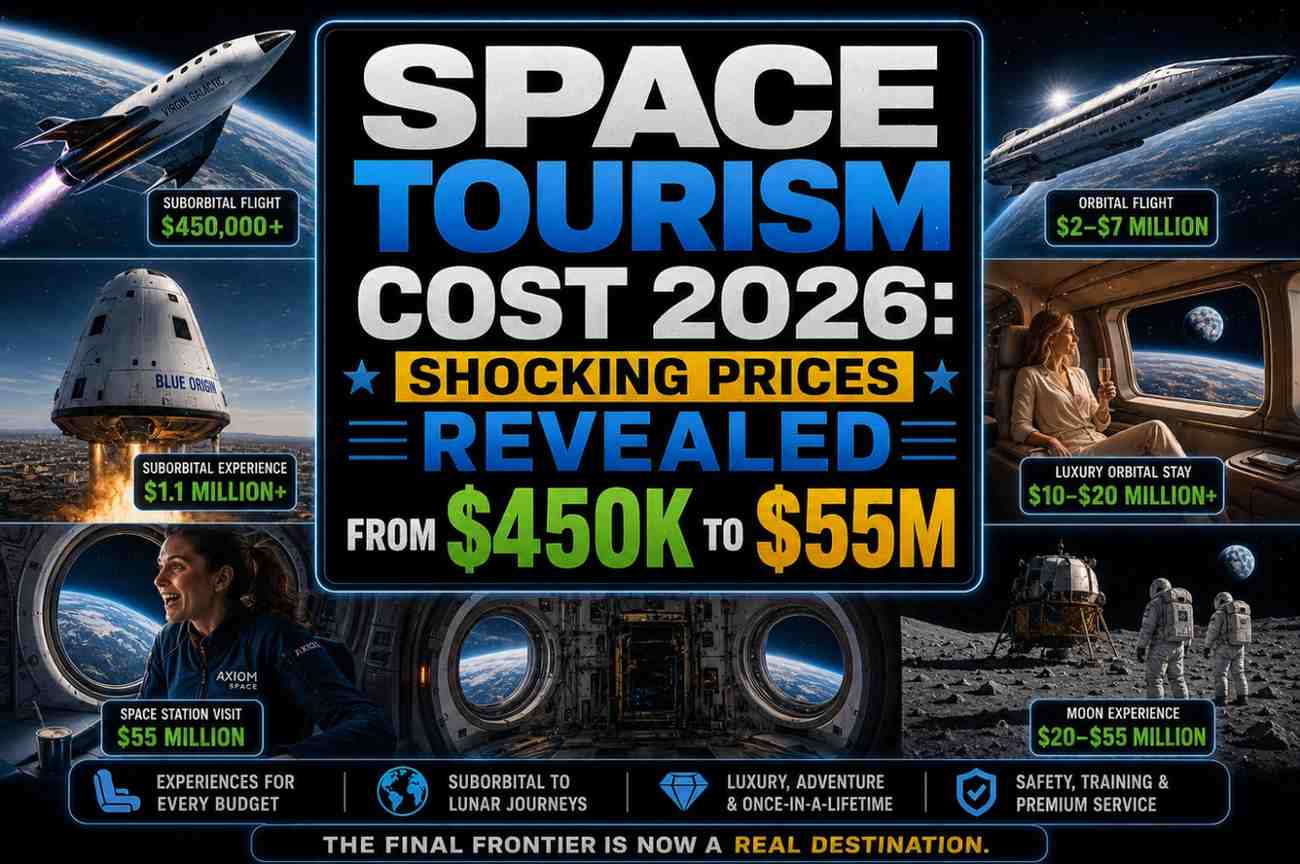
Introduction
The space tourism cost in 2026 is finally a real number you can look up—not a hypothetical from a science fiction novel.
Three companies are actively selling tickets. Multiple destinations are available. And while the prices are still out of reach for most people, they’ve fallen dramatically from just five years ago.
This guide breaks down every space tourism cost in the 2026 tier—from suborbital hops to orbital hotel stays—so you know exactly what you’re paying for.
The Three Tiers of Space Tourism in 2026
Space tourism cost in 2026 varies enormously depending on what “space” means for your trip:
- Suborbital—Cross the Kármán line (100km), experience 3–5 minutes of weightlessness, return to Earth
- Orbital — Reach Earth orbit, circle the planet for days or weeks
- Lunar/Deep Space — Travel to the Moon or beyond (limited availability; extreme price)
Each tier has completely different space tourism costs in 2026, different operators, and very different experiences.
Suborbital Space Tourism: The Entry-Level Ticket
Blue Origin New Shepard — ~$450,000 to $500,000
Blue Origin’s New Shepard is the most affordable space tourism cost option in 2026.
What you get:
- 11-minute flight
- Crosses the Kármán line at ~107km altitude
- ~4 minutes of weightlessness
- 6 seats per capsule
- Large windows (the largest ever on a spacecraft per window-to-wall ratio)
- Fully automated — no pilot needed
Blue Origin has not officially published ticket prices, but secondary market transactions and industry reports place the space tourism cost for a New Shepard seat at approximately $450,000–$500,000 in 2026. Prices are reported to have declined from the $1M+ range in 2021.
Virgin Galactic VSS Unity — $600,000 to $800,000
Virgin Galactic resumed flights in 2023 with VSS Unity and continues in 2026 with its next-generation Delta class spacecraft.
The experience differs from New Shepard:
- Launched from a carrier aircraft (WhiteKnightTwo) rather than vertical rocket
- ~90-minute total experience (including ascent and glide back)
- 6 passengers + 2 pilots
- Flies to approximately 80–90km (FAA definition of space; below Kármán line by some measures)
Space tourism cost for Virgin Galactic in 2026: approximately $600,000–$800,000 depending on seat class.
Orbital Space Tourism: Staying in Space for Days
Axiom Space ISS Missions — ~$55 Million
Axiom Space offers the most established orbital space tourism cost in 2026.
Their private astronaut missions dock with the International Space Station for up to 14 days. Past passengers include:
- Larry Connor (real estate investor, US)
- Eytan Stibbe (philanthropist, Israel)
- Mark Pathy (businessman, Canada)
The space tourism cost for an Axiom Mission seat is approximately $55 million, which includes:
- Training at Johnson Space Center (10 weeks)
- SpaceX Crew Dragon flight
- 14 days aboard the ISS
- Return flight and recovery
This is genuinely competitive with older Soyuz-based space tourist flights, which ran $20–35 million in the 2000s before accounting for inflation.
Space Adventures Orbital Missions — $55–$90 Million
Space Adventures has brokered private spaceflight since 2001. In 2026 they offer:
- ISS visits via Soyuz or Dragon: ~$55M
- Spacewalk add-on: +$15M
- Free-flying orbital missions (non-ISS): ~$75–90M
The spacewalk is the premium add-on. Stepping outside the spacecraft in orbit — just you and the vacuum of space — commands a significant premium on the base space tourism cost in 2026.
Space Hotel Experiences: Coming in 2026–2028
Axiom Station Private Modules — Price TBD
As Axiom attaches its own modules to the ISS (2026), they’ll offer stays that include their private, luxury-designed crew quarters — separate from NASA’s functional ISS sections.
Estimated space tourism cost for Axiom Station private module stays: $60–80 million for 10–14 days.
Orbital Assembly’s Voyager Station — Target 2027
Orbital Assembly Corporation’s Voyager Station promises artificial gravity through rotation — a first for any space habitat. Pricing has not been finalized, but estimates suggest $5 million per person for a 3-day stay at target scale.
That’s still expensive. But it’s a different order of magnitude from the $55M+ ISS visits.
Lunar Tourism: The Ultra-Premium Space Tourism Cost
SpaceX Starship Lunar Flyby — ~$120–200 Million
Yusaku Maezawa, the Japanese billionaire, contracted with SpaceX for a Starship lunar flyby (dearMoon project) — originally planned for 2023, now targeting 2025–2026 with Version 3 hardware.
His mission carried 8 additional artists at no cost to them (Maezawa paid for all seats). The total mission cost has not been disclosed, but industry estimates place the full mission at $200M+, implying a per-seat value of $20–25M if bought commercially.
A true commercial lunar flyby ticket is not yet publicly priced, but represents the apex of space tourism cost in 2026.
Related: SpaceX Starship Version 3 Capabilities 2026 — What the New Rocket Can Actually Do
Are Space Tourism Costs Falling?
Yes — but slower than space optimists hoped.
Historical price trajectory:
- 2001: Dennis Tito pays ~$20M (Soyuz, ISS, 8 days)
- 2021: Suborbital seats sell for $1M+ (Blue Origin first crewed flight)
- 2026: Suborbital seats: ~$450K–800K; Orbital: $55M
For suborbital, costs have dropped roughly 50% in 5 years. That trend continues. Analysts expect:
- 2028: Suborbital tickets under $200,000
- 2030: Suborbital below $100,000 with Virgin Galactic’s Delta fleet at full cadence
- 2035: Orbital stays at $5–15M with commercial station competition
The driver is reusability. As SpaceX Starship, Blue Origin New Glenn, and Rocket Lab Neutron all mature, launch costs per kilogram drop — and space tourism costs in 2026 and beyond follow.
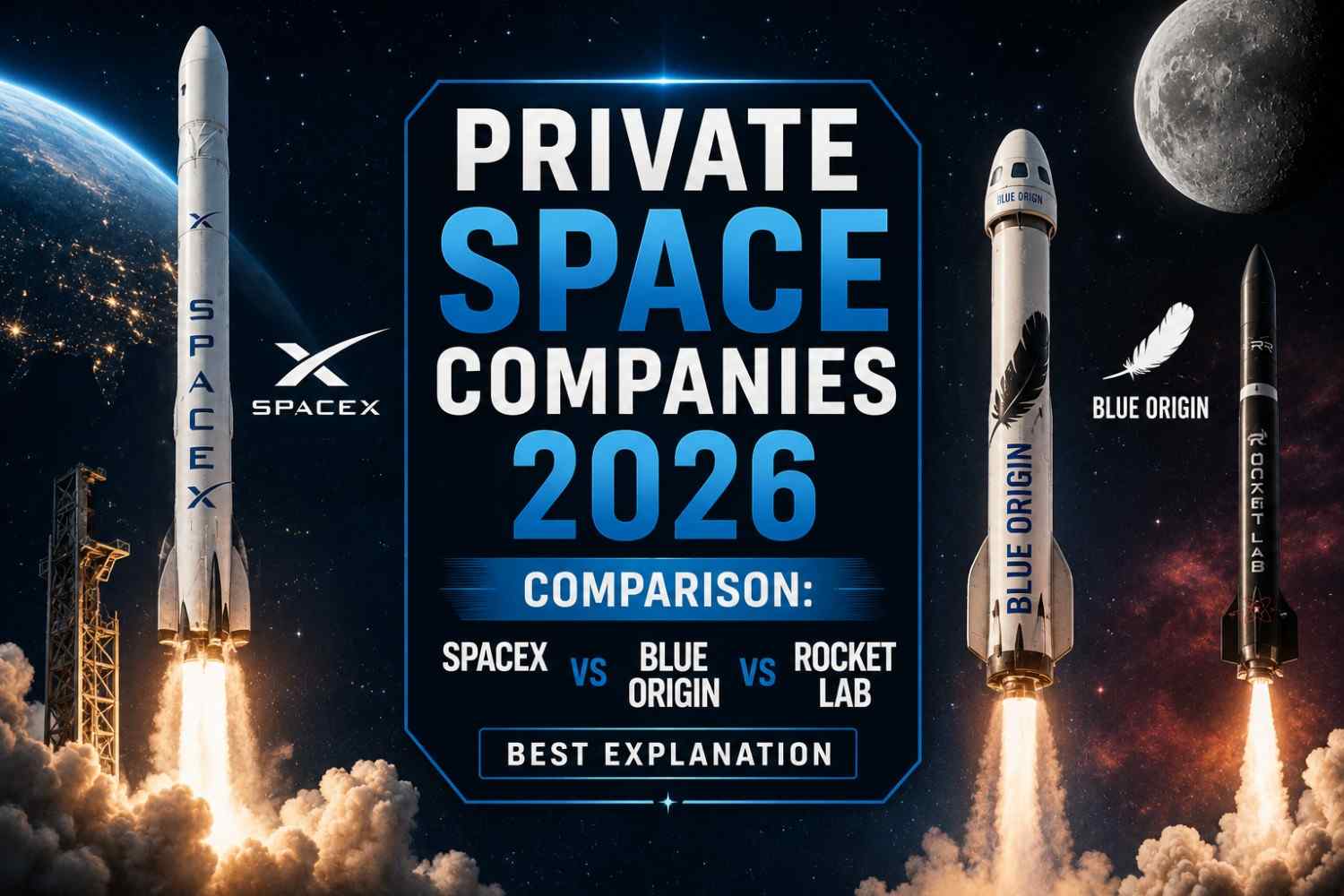
Related: Private Space Companies 2026 Comparison — SpaceX vs Blue Origin vs Rocket Lab
What’s Included in the Space Tourism Price?
Many people ask whether space tourism cost in 2026 includes training. Here’s a typical breakdown:
Suborbital (Blue Origin):
- 1–2 days of training at launch facility
- Flight suit
- Pre- and post-flight hospitality
- Certificate and memorabilia
Orbital (Axiom):
- 10 weeks of training at JSC, Houston
- Medical evaluation
- Custom spacesuit fitting
- Launch day hospitality
- Mission patches and documentation
- 14 days in orbit
- Recovery and post-flight medical
The more expensive the ticket, the more comprehensive the wraparound experience. Some companies are beginning to offer installment payment plans for suborbital flights.
How to Book a Space Tourism Ticket in 2026
Direct booking options:
- Blue Origin: blueorigin.com — waitlist-based application
- Virgin Galactic: Direct reservation with deposit
- Axiom Space: Mission application with medical and financial qualification process
- Space Adventures: Brokered arrangements for ISS and Soyuz-compatible missions
Note that all operators require medical qualification. Suborbital is relatively lenient — Blue Origin has flown passengers aged 18 to 90. Orbital missions require a more rigorous physical, closer to astronaut standards.
5 Frequently Asked Questions
Q1: What is the cheapest space tourism cost in 2026? Blue Origin New Shepard offers the most affordable option at approximately $450,000–$500,000 for a suborbital flight. This gets you above the Kármán line with ~4 minutes of weightlessness.
Q2: Can regular people afford space tourism in 2026? Not yet. Even the cheapest space tourism cost in 2026 requires significant wealth. However, market analysts project ticket prices below $100,000 by the early 2030s as reusable rockets scale up.
Q3: How long is a typical space tourism trip? Suborbital: 11–90 minutes total. Orbital: 8–14 days. Lunar flyby: ~6 days.
Q4: Is space tourism safe? Statistically, early-era commercial spaceflight carries risk. Blue Origin has flown 31 people without fatality. Axiom has successfully flown 4 missions. No commercial space tourist has died — though spaceflight risk is never zero.
Q5: Does space tourism cost include travel insurance? Most operators do not include space travel insurance, which is a separate specialist product. Companies like Atrium Space Insurance and AXA XL offer coverage, but premiums are high.
Conclusion
Space tourism cost in 2026 is real, it’s varied, and it’s falling. From $450,000 for a suborbital hop to $55 million for two weeks in orbit, there are now actual price points attached to actual experiences.
The market is immature but moving fast. Competition between Blue Origin, Virgin Galactic, Axiom, and eventually Starship-based tourism will continue to drive space tourism costs down throughout the decade.
If a trip to space is your dream, start monitoring prices now. What costs half a million today may cost fifty thousand in ten years.
Stay current with our space tourism coverage — including operator reviews, mission reports, and price updates as they happen.
External sources: Blue Origin New Shepard | Axiom Space Private Astronaut Missions